Magic Cello 3D Wooden Puzzle Music Box: Build & Play
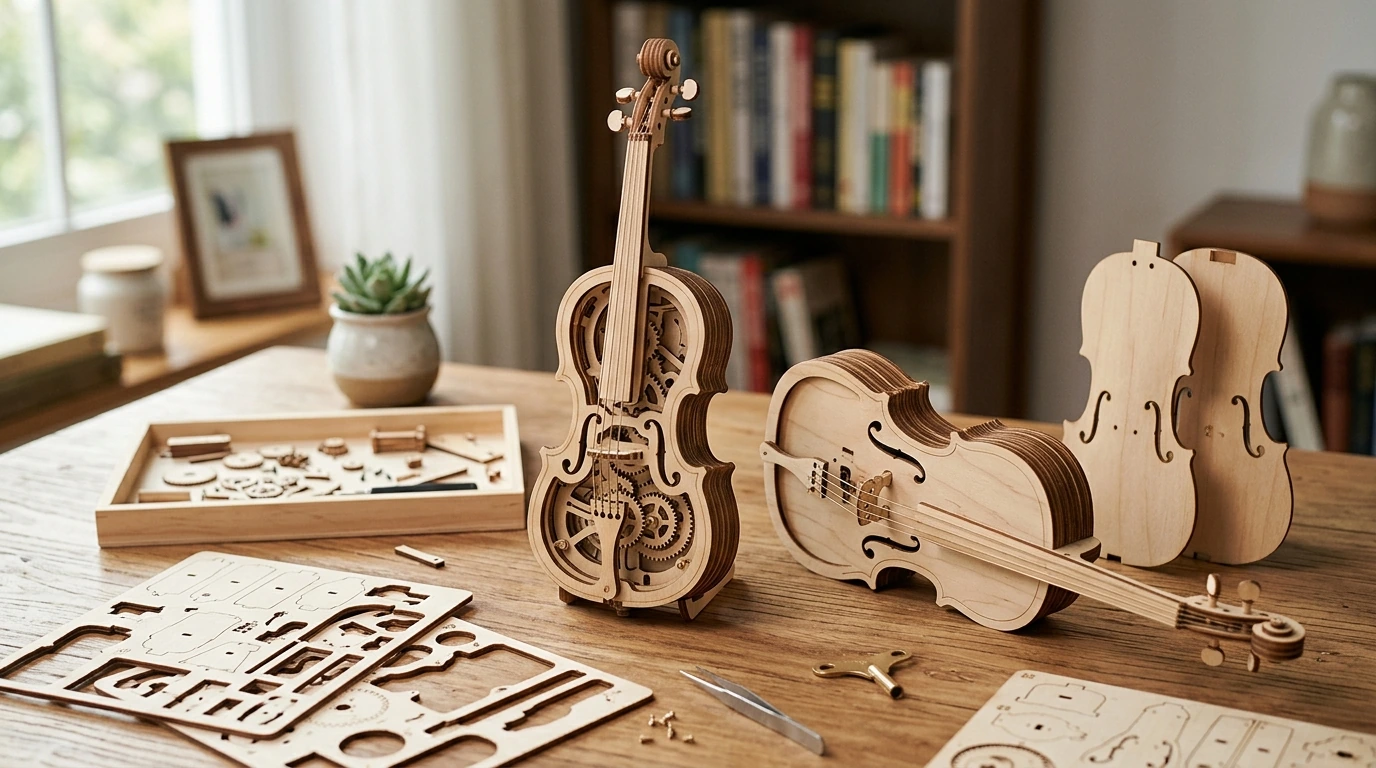
3D Wooden Puzzle Magic Cello Music Box: Buildable Decor That Plays
A wooden puzzle that becomes a cello-shaped music box brings together hands-on building and a finished piece you’ll actually want to leave out on display. The Magic Cello Music Box starts as precision-cut wooden parts and ends as a cello-inspired silhouette with a wind-up mechanism that adds motion and music. Below is a practical guide to what makes it unique, what assembly feels like, how the mechanism behaves in everyday use, and how to gift and care for it so it stays looking (and sounding) great.
What Makes the Magic Cello Music Box Special
The appeal is in the transformation: a 3D wooden puzzle that assembles into a cello-like form with a functional music box inside. Unlike typical shelf decor, it earns its spot by being something you built, piece by piece, and can interact with after.
- 3D wooden puzzle design that assembles into a cello-inspired music box silhouette.
- A functional wind-up music mechanism adds motion and sound to the finished model.
- Works as a desktop display piece after the build—ideal for shelves, bedside tables, and giftable decor.
- Build experience suits hobbyists who enjoy careful, step-by-step assembly and a satisfying final reveal.
If you’re curious about how traditional music boxes create their chiming tone, Encyclopaedia Britannica offers a helpful overview of the music box mechanism and history.
Who It’s For (and When It’s a Great Gift)
This type of build is best for someone who enjoys process as much as outcome. It’s calming, detail-oriented, and especially satisfying if the recipient likes music-themed objects that feel more personal than mass-produced decor.
- Music lovers and instrument-themed collectors who want decor that feels personal.
- Puzzle and model builders looking for an evening-to-weekend project with a usable end result.
- Gift occasions: birthdays, graduations, music recitals, teachers, and holiday exchanges where a “build + keep” present stands out.
- Good for shared activities: assembling together encourages patience, teamwork, and careful handling of small parts.
To make it a “gift-ready” moment, pairing the build with a display upgrade can be a nice touch—like a dedicated corner shelf or plant-and-decor rack such as the Multi-Tiered Plant Stand – 11 Pot Indoor Flower Shelf, Tall Metal & Wood Rack.
What to Expect During Assembly
Assembly is typically a steady, step-by-step experience rather than a quick snap-together project. The biggest factor in a smooth build is resisting the urge to rush—especially when aligning interlocking joints or guiding small parts into position.
- Preparation: clear a flat workspace, good lighting, and a small tray for keeping pieces organized.
- Pacing: taking short breaks helps prevent misalignment and reduces the chance of forcing a piece.
- Handling: wooden puzzle parts can be delicate; steady pressure is better than bending or twisting.
- Finishing: once assembled, test moving parts slowly before fully winding the mechanism.
One practical tip: if a connection feels “almost right,” it usually means something upstream is slightly off. Backing up a step and re-checking alignment tends to save time (and prevents stress on the wood).
Quick Reference: Build and Use Checklist
| Step | What to Do | Why It Helps |
|---|---|---|
| Sort parts first | Group similar shapes and keep tiny pieces in a dish | Prevents lost parts and reduces assembly errors |
| Dry-fit tricky joins | Test how pieces slide/lock before committing | Avoids forcing and wood stress |
| Check clearance | Ensure moving parts don’t rub against nearby panels | Improves smooth motion and sound consistency |
| Wind gently | Turn the key slowly and stop if it feels tight | Protects the spring mechanism from over-tension |
Music Box Mechanism and Everyday Use
Once built, the mechanism is meant for light, regular enjoyment rather than hard winding or constant replays. A little care goes a long way toward keeping the sound bright and the motion smooth.
For day-to-day placement, a stable tabletop helps reduce vibration and keeps the tune more consistent. If your space runs dry or humid depending on season, a room-balancing option like the 6L Smart Humidifier with Warm & Cool Mist, 60-Hour Run Time, Alexa Compatible can be a helpful companion for wooden decor in general.
Safety, Age Range, and Care
For additional guidance around choking hazards and small components, review the U.S. Consumer Product Safety Commission’s toy safety resources: CPSC Toy Safety (Small Parts and Choking Hazards). For a broader safety framework, ASTM provides an overview of ASTM F963 toy safety specifications.
Where to Get the Magic Cello Music Box
To check current pricing, availability, and product details, visit the official listing for the 3D Wooden Puzzle Magic Cello Music Box. If you’re gifting it, adding a short note suggesting a calm build session, good lighting, and a clear workspace can noticeably improve the experience.
FAQ
Is the Magic Cello Music Box difficult to assemble?
Difficulty depends on comfort with small parts and careful alignment. Sorting pieces first, following steps in order, and taking short breaks helps avoid forcing connections and reduces mistakes.
How does a wind-up music box mechanism work?
A spring stores energy as you wind, then releases it to drive the mechanism at a steady speed. Inside, a rotating component triggers tuned metal teeth to create the familiar chiming notes; gentle winding and stopping at resistance helps protect the spring.
Is it suitable for children?
It’s better for older kids or teens who can follow instructions patiently, since small parts can be a choking hazard. Adult supervision is recommended in family settings, especially during assembly.















Leave a comment