Jute vs Sisal for Cat Scratching: Which Is Better?
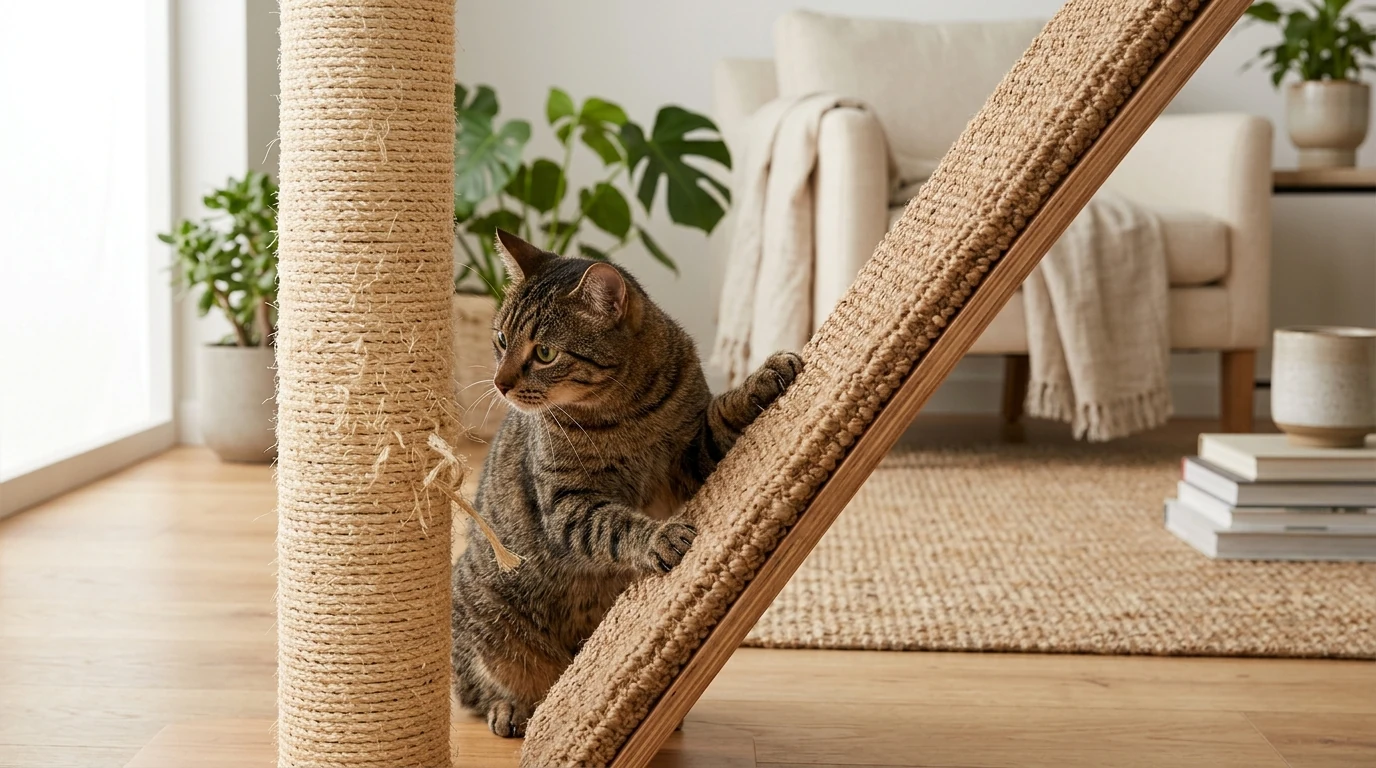
Which is better for cat scratching, jute or sisal?
Sisal is usually the better choice for cat scratching because it’s tougher, more textured, and holds up longer under repeated clawing. Cats tend to get a satisfying “grab” on sisal, which helps them shred and stretch without the material going limp too quickly. If the goal is a scratcher that stays rough and functional over time, sisal is the safer bet.
Why sisal often wins for durability
Sisal (commonly made from agave fibers) is naturally stiff and abrasion-resistant. On scratching posts, it keeps its coarse feel even after lots of use, so your cat stays interested. It also tends to fray in a way many cats enjoy, while still maintaining structure, meaning the post remains usable instead of flattening out.
When jute can be a good pick
Jute is softer and can feel less scratchy to the touch, which some cats prefer—especially kittens, seniors, or cats that don’t like very rough textures. It can also be a nice fit for lighter scratchers or cat furniture where comfort and appearance matter. The tradeoff is that jute may wear down faster, loosen, or shed more quickly depending on the weave and how intensely your cat scratches.
What to look for either way
Material matters, but construction matters too. Look for tightly wrapped rope (or tightly woven fabric), strong adhesive or stapling, and a stable base that won’t wobble. A great sisal post can outperform a poor-quality sisal post by a mile, and the same is true for jute.
For a deeper side-by-side breakdown and shopping tips, visit https://worthyofferhut.shop/which-is-better-for-cat-scratching-jute-or-sisal/.
FAQ
How do I get my cat to use a scratching post instead of furniture?
Place the post near your cat’s favorite scratching spot, reward any interaction with treats or praise, and try catnip on the post. Cover the targeted furniture area temporarily or use a deterrent so the post becomes the easiest, most rewarding option.











Leave a comment